NEW YORK TIMES BESTSELLER ⢠NAMED ONE OF THE BEST BOOKS OF THE YEAR BY THE WASHINGTON POST AND KIRKUS REVIEWS
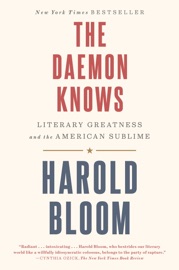
Hailed as âthe indispensable criticâ by The New York Review of Books, Harold BloomâNew York Times bestselling writer and Sterling Professor of Humanities at Yale Universityâhas for decades been sharing with readers and students his genius and passion for understanding literature and explaining why it matters. Now he turns at long last to his beloved writers of our national literature in an expansive and mesmerizing book that is one of his most incisive and profoundly personal to date. A product of five years of writing and a lifetime of reading and scholarship, The Daemon Knows may be Bloomâs most masterly book yet.
Pairing Walt Whitman with Herman Melville, Ralph Waldo Emerson with Emily Dickinson, Nathaniel Hawthorne with Henry James, Mark Twain with Robert Frost, Wallace Stevens with T. S. Eliot, and William Faulkner with Hart Crane, Bloom places these writersâ works in conversation with one another, exploring their relationship to the âdaemonââthe spark of genius or Orphic museâin their creation and helping us understand their writing with new immediacy and relevance. It is the intensity of their preoccupation with the sublime, Bloom proposes, that distinguishes these American writers from their European predecessors.
As he reflects on a lifetime lived among the works explored in this book, Bloom has himself, in this magnificent achievement, created a work touched by the daemon.
Praise for The Daemon Knows
âEnrapturing . . . radiant . . . intoxicating . . . Harold Bloom, who bestrides our literary world like a willfully idiosyncratic colossus, belongs to the party of rapture.ââCynthia Ozick, The New York Times Book Review
âThe capstone to a lifetime of thinking, writing and teaching . . . The primary strength of The Daemon Knows is the brilliance and penetration of the connections Bloom makes among the great writers of the past, the shrewd sketching of intellectual feuds or oppositions that he calls agons. . . . Bloomâs books are like a splendid map of literature, a majestic aerial view that clarifies what we cannot see from the ground.ââThe Washington Post
âAudacious . . . The Yale literary scholar has added another remarkable treatise to his voluminous body of work.ââThe Huffington Post âThe sublime The Daemon Knows is a veritable feast for the general reader (me) as well as the advanced (I assume) one.ââJohn Ashbery âMesmerizing.ââNew York Journal of Books âBloom is a formidable critic, an extravagant intellect.ââChicago Tribune
âAs always, Bloom conveys the intimate, urgent, compelling sense of why it matters that we read these canonical authors.ââKirkus Reviews (starred review)
âFew people write criticism as nakedly confident as Bloomâs any more.ââThe Guardian (U.K.)
NEW YORK TIMES BESTSELLER ⢠NAMED ONE OF THE BEST BOOKS OF THE YEAR BY THE WASHINGTON POST AND KIRKUS REVIEWS
Hailed as âthe indispensable criticâ by The New York Review of Books, Harold BloomâNew York Times bestselling writer and Sterling Professor of Humanities at Yale Universityâhas for decades been sharing with readers and students his genius and passion for understanding literature and explaining why it matters. Now he turns at long last to his beloved writers of our national literature in an expansive and mesmerizing book that is one of his most incisive and profoundly personal to date. A product of five years of writing and a lifetime of reading and scholarship, The Daemon Knows may be Bloomâs most masterly book yet.
Pairing Walt Whitman with Herman Melville, Ralph Waldo Emerson with Emily Dickinson, Nathaniel Hawthorne with Henry James, Mark Twain with Robert Frost, Wallace Stevens with T. S. Eliot, and William Faulkner with Hart Crane, Bloom places these writersâ works in conversation with one another, exploring their relationship to the âdaemonââthe spark of genius or Orphic museâin their creation and helping us understand their writing with new immediacy and relevance. It is the intensity of their preoccupation with the sublime, Bloom proposes, that distinguishes these American writers from their European predecessors.
As he reflects on a lifetime lived among the works explored in this book, Bloom has himself, in this magnificent achievement, created a work touched by the daemon.
Praise for The Daemon Knows
âEnrapturing . . . radiant . . . intoxicating . . . Harold Bloom, who bestrides our literary world like a willfully idiosyncratic colossus, belongs to the party of rapture.ââCynthia Ozick, The New York Times Book Review
âThe capstone to a lifetime of thinking, writing and teaching . . . The primary strength of The Daemon Knows is the brilliance and penetration of the connections Bloom makes among the great writers of the past, the shrewd sketching of intellectual feuds or oppositions that he calls agons. . . . Bloomâs books are like a splendid map of literature, a majestic aerial view that clarifies what we cannot see from the ground.ââThe Washington Post
âAudacious . . . The Yale literary scholar has added another remarkable treatise to his voluminous body of work.ââThe Huffington Post âThe sublime The Daemon Knows is a veritable feast for the general reader (me) as well as the advanced (I assume) one.ââJohn Ashbery âMesmerizing.ââNew York Journal of Books âBloom is a formidable critic, an extravagant intellect.ââChicago Tribune
âAs always, Bloom conveys the intimate, urgent, compelling sense of why it matters that we read these canonical authors.ââKirkus Reviews (starred review)
âFew people write criticism as nakedly confident as Bloomâs any more.ââThe Guardian (U.K.)