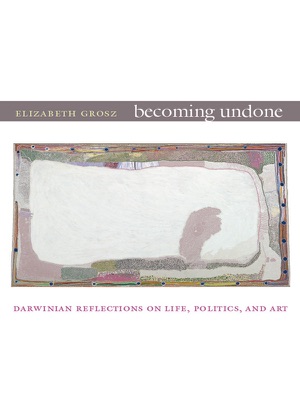
In Becoming Undone, Elizabeth Grosz addresses three related conceptsâlife, politics, and artâby exploring the implications of Charles Darwinâs account of the evolution of species. Challenging characterizations of Darwinâs work as a form of genetic determinism, Grosz shows that his writing reveals an insistence on the difference between natural selection and sexual selection, the principles that regulate survival and attractiveness, respectively. Sexual selection complicates natural selection by introducing aesthetic factors and the expression of individual will, desire, or pleasure. Grosz explores how Darwinâs theory of sexual selection transforms philosophy, our understanding of humanity in its male and female forms, our ideas of political relations, and our concepts of art. Connecting the naturalistâs work to the writings of Bergson, Deleuze, and Irigaray, she outlines a postmodern Darwinism that understands all of life as forms of competing and coordinating modes of openness. Although feminists have been suspicious of the concepts of nature and biology central to Darwinâs work, Grosz proposes that his writings are a rich resource for developing a more politicized, radical, and far-reaching feminist understanding of matter, nature, biology, time, and becoming.