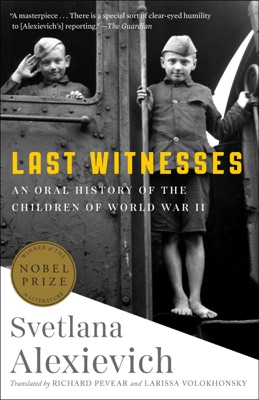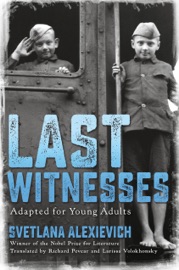
âA masterpieceâ (The Guardian) from the Nobel Prizeâwinning writer, an oral history of childrenâs experiences in World War II across Russia
NAMED ONE OF THE BEST BOOKS OF THE YEAR BY THE WASHINGTON POST
For more than three decades, Svetlana Alexievich has been the memory and conscience of the twentieth century. When the Swedish Academy awarded her the Nobel Prize, it cited her for inventing âa new kind of literary genre,â describing her work as âa history of emotions . . . a history of the soul.â
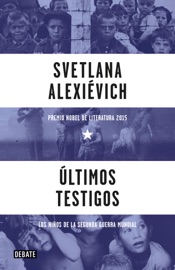
Bringing together dozens of voices in her distinctive style, Last Witnesses is Alexievichâs collection of the memories of those who were children during World War II. They had sometimes been soldiers as well as witnesses, and their generation grew up with the trauma of the war deeply embeddedâa trauma that would change the course of the Russian nation.
Collectively, this symphony of childrenâs stories, filled with the everyday details of life in combat, reveals an altogether unprecedented view of the war. Alexievich gives voice to those whose memories have been lost in the official narratives, uncovering a powerful, hidden history from the personal and private experiences of individuals.
Translated by the renowned Richard Pevear and Larissa Volokhonsky, Last Witnesses is a powerful and poignant account of the central conflict of the twentieth century, a kaleidoscopic portrait of the human side of war.
Praise for Last Witnesses
âThere is a special sort of clear-eyed humility to [Alexievichâs] reporting.ââThe Guardian
âA bracing reminder of the enduring power of the written word to testify to pain like no other medium. . . . Children survive, they grow up, and they do not forget. They are the first and last witnesses.ââThe New Republic
âA profound triumph.ââThe Big Issue
â[Alexievich] excavates and briefly gives prominence to demolished lives and eradicated communities. . . . It is impossible not to turn the page, impossible not to wonder whom we next might meet, impossible not to think differently about children caught in conflict.ââThe Washington Post
Last Witnesses - Svetlana Alexievich, Richard Pevear & Larissa Volokhonsky
By Svetlana Alexievich, Richard Pevear & Larissa Volokhonsky
âA masterpieceâ (The Guardian) from the Nobel Prizeâwinning writer, an oral history of childrenâs experiences in World War II across Russia
NAMED ONE OF THE BEST BOOKS OF THE YEAR BY THE WASHINGTON POST
For more than three decades, Svetlana Alexievich has been the memory and conscience of the twentieth century. When the Swedish Academy awarded her the Nobel Prize, it cited her for inventing âa new kind of literary genre,â describing her work as âa history of emotions . . . a history of the soul.â
Bringing together dozens of voices in her distinctive style, Last Witnesses is Alexievichâs collection of the memories of those who were children during World War II. They had sometimes been soldiers as well as witnesses, and their generation grew up with the trauma of the war deeply embeddedâa trauma that would change the course of the Russian nation.
Collectively, this symphony of childrenâs stories, filled with the everyday details of life in combat, reveals an altogether unprecedented view of the war. Alexievich gives voice to those whose memories have been lost in the official narratives, uncovering a powerful, hidden history from the personal and private experiences of individuals.
Translated by the renowned Richard Pevear and Larissa Volokhonsky, Last Witnesses is a powerful and poignant account of the central conflict of the twentieth century, a kaleidoscopic portrait of the human side of war.
Praise for Last Witnesses
âThere is a special sort of clear-eyed humility to [Alexievichâs] reporting.ââThe Guardian
âA bracing reminder of the enduring power of the written word to testify to pain like no other medium. . . . Children survive, they grow up, and they do not forget. They are the first and last witnesses.ââThe New Republic
âA profound triumph.ââThe Big Issue
â[Alexievich] excavates and briefly gives prominence to demolished lives and eradicated communities. . . . It is impossible not to turn the page, impossible not to wonder whom we next might meet, impossible not to think differently about children caught in conflict.ââThe Washington Post
More by Svetlana Alexievich, Richard Pevear & Larissa Volokhonsky