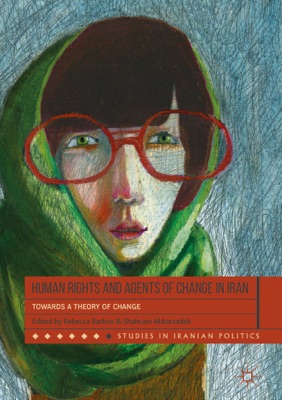
This volume extends debates on the interaction between universal human rights and thepolitical experiences of Iranians, through a conceptual analysis of âtheories of changeâ. Itassesses the practical processes by which individuals, organizations and movements can reformor impact the structural, theological, and political challenges faced in the Iranian context.Contributors to this volume investigate how structures, institutions, and agents in Iranmaneuver for influence and power at the state level, through the law, in international corridors,at the grassroots, and by implementing multiple and complex methods. The chapters providedistinct but interrelated analysis of key drivers of change in Iran. A number of those operateprimarily through top-down approaches, such as the political reform movement, lawyerspursuing legislative change, and international human rights monitoring bodies. Others takea bottom-up approach, including local movements and campaigns such as the womenâsmovement, the student movement, and ethnic minority groups. Rebecca Barlow is a Senior Research Fellow at the Alfred Deakin Institute for Citizenshipand Globalisation, Deakin University, Australia. Her research focuses on the Iranian womenâsmovement and the politics of human rights in the Islamic Republic of Iran. Dr. Barlow isthe author of Universal Womenâs Human Rights and the Muslim Question: Iranâs One MillionSignatures Campaign (2012). She has worked for the Victorian Local Governance Association toproduce a toolkit to implement the âVictorian Charter of Human Rights and Responsibilitiesâ.She has also interned and acted as Consultant for the United Nations Population Fund (UNFPA)Gender, Human Rights and Culture Branch, working on the United Nations Global Forum ofFaith-based Organisations in Population and Development (2008). Shahram Akbarzadeh is Professor of Middle East & Central Asian Politics at the Alfred DeakinInstitute for Citizenship and Globalisation, Deakin University, Australia. Prof. Akbarzadeh isauthor of Uzbekistan and the United States (2005), US Foreign Policy in the Middle East (2008with Kylie Baxter) and Muslim Active Citizenship in the West (2014 with Mario Peucker). He is thefounding Editor of the Islamic Studies Series and a regular public commentator.
Human Rights and Agents of Change in Iran - Rebecca Barlow & Shahram Akbarzadeh
This volume extends debates on the interaction between universal human rights and thepolitical experiences of Iranians, through a conceptual analysis of âtheories of changeâ. Itassesses the practical processes by which individuals, organizations and movements can reformor impact the structural, theological, and political challenges faced in the Iranian context.Contributors to this volume investigate how structures, institutions, and agents in Iranmaneuver for influence and power at the state level, through the law, in international corridors,at the grassroots, and by implementing multiple and complex methods. The chapters providedistinct but interrelated analysis of key drivers of change in Iran. A number of those operateprimarily through top-down approaches, such as the political reform movement, lawyerspursuing legislative change, and international human rights monitoring bodies. Others takea bottom-up approach, including local movements and campaigns such as the womenâsmovement, the student movement, and ethnic minority groups. Rebecca Barlow is a Senior Research Fellow at the Alfred Deakin Institute for Citizenshipand Globalisation, Deakin University, Australia. Her research focuses on the Iranian womenâsmovement and the politics of human rights in the Islamic Republic of Iran. Dr. Barlow isthe author of Universal Womenâs Human Rights and the Muslim Question: Iranâs One MillionSignatures Campaign (2012). She has worked for the Victorian Local Governance Association toproduce a toolkit to implement the âVictorian Charter of Human Rights and Responsibilitiesâ.She has also interned and acted as Consultant for the United Nations Population Fund (UNFPA)Gender, Human Rights and Culture Branch, working on the United Nations Global Forum ofFaith-based Organisations in Population and Development (2008). Shahram Akbarzadeh is Professor of Middle East & Central Asian Politics at the Alfred DeakinInstitute for Citizenship and Globalisation, Deakin University, Australia. Prof. Akbarzadeh isauthor of Uzbekistan and the United States (2005), US Foreign Policy in the Middle East (2008with Kylie Baxter) and Muslim Active Citizenship in the West (2014 with Mario Peucker). He is thefounding Editor of the Islamic Studies Series and a regular public commentator.