âTolerance becomes a crime when applied to evil.â
The Thomas Mann Collection comprises unabridged recordings of three of the authorâs greatest works, where intellect wrestles with emotion and tradition collides with modernity to examine the human condition across time and culture.
The titles included here are:
The Magic Mountain(1924): Hans Castorp, a young German engineer, arrives at a luxurious Alpine sanatorium to visit his ailing cousin, but what begins as a brief stay stretches into seven years, as he becomes immersed in a world of illness, introspection, and intellectual debate. With Europe on the brink of catastrophe, Castorpâs journey becomes a profound meditation on the human condition.
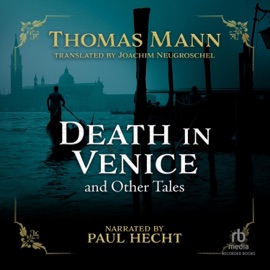
Death in Venice(1912): This masterful meditation on art, desire, and the fatal allure of beauty follows ageing writer, Gustav von Aschenbach, to Venice in pursuit of artistic inspiration â where he becomes consumed by an obsessive love that leads him into a tragic spiral of longing and loss.
Thomas Mann (1875â1955) was a renowned German novelist, short story writer, and essayist, celebrated for his exploration of complex themes, his profound psychological insight, and critique of bourgeois society.
Born into a wealthy trading family, he studied law and economics before turning to writing and had his major breakthrough with Buddenbrooks, which depicts the decline of a bourgeois family. International acclaim came with the publication of The Magic Mountain (1924), a philosophical novel set in a sanatorium that explores themes such as life, death, time and ideological conflict. His other notable works include Death in Venice (1912) and Doktor Faustus (1947). In 1929, he received the Nobel Prize for Literature in recognition of his significant contributions to German literature.
Mann was politically active against fascism, leading him to leave Germany in 1933 due to the rise of the Nazi regime. He lived in Switzerland and later in the United States during World War II. Despite the challenges, he continued to write and became a prominent voice against totalitarianism.
This audiobook is fully indexed. Once downloaded, each book and chapter will be listed so you can easily navigate to the individual sections.
The Thomas Mann Collection: Magic Mountain, Buddenbrooks, and Death in Venice (Unabridged) - Thomas Mann
âTolerance becomes a crime when applied to evil.â
The Thomas Mann Collection comprises unabridged recordings of three of the authorâs greatest works, where intellect wrestles with emotion and tradition collides with modernity to examine the human condition across time and culture.
The titles included here are:
The Magic Mountain(1924): Hans Castorp, a young German engineer, arrives at a luxurious Alpine sanatorium to visit his ailing cousin, but what begins as a brief stay stretches into seven years, as he becomes immersed in a world of illness, introspection, and intellectual debate. With Europe on the brink of catastrophe, Castorpâs journey becomes a profound meditation on the human condition.
Death in Venice(1912): This masterful meditation on art, desire, and the fatal allure of beauty follows ageing writer, Gustav von Aschenbach, to Venice in pursuit of artistic inspiration â where he becomes consumed by an obsessive love that leads him into a tragic spiral of longing and loss.
Thomas Mann (1875â1955) was a renowned German novelist, short story writer, and essayist, celebrated for his exploration of complex themes, his profound psychological insight, and critique of bourgeois society.
Born into a wealthy trading family, he studied law and economics before turning to writing and had his major breakthrough with Buddenbrooks, which depicts the decline of a bourgeois family. International acclaim came with the publication of The Magic Mountain (1924), a philosophical novel set in a sanatorium that explores themes such as life, death, time and ideological conflict. His other notable works include Death in Venice (1912) and Doktor Faustus (1947). In 1929, he received the Nobel Prize for Literature in recognition of his significant contributions to German literature.
Mann was politically active against fascism, leading him to leave Germany in 1933 due to the rise of the Nazi regime. He lived in Switzerland and later in the United States during World War II. Despite the challenges, he continued to write and became a prominent voice against totalitarianism.
This audiobook is fully indexed. Once downloaded, each book and chapter will be listed so you can easily navigate to the individual sections.